
Methods
- Online surveys
- Celebrity interviews
- Competitor analysis
- Persona
- Task mapping
- Eisenhower matrix
The problem
Fans wanted a more personal connection with the celebrities they follow, and there was no convenient place to get one. SuperEstar's plan was a website where fans buy personalized moments and celebrities sell them on their own terms.
The research had two goals: get fans more engaged through personal interactions, and attract and keep a wide range of celebrities by letting them shape their own services and packages. The target audience was fans aged 18 to 35. The process ran in four stages: discover, define, ideate, design.
The business had its own pressures. It needed a healthy mix of fans and talent, revenue that didn't price fans out, a way to keep up with fast-moving entertainment trends, and room to grow.
Research
Fans wanted personal contact with celebrities, and they had a budget in mind. We learned that from several online surveys with potential users, plus interviews with several celebrities.
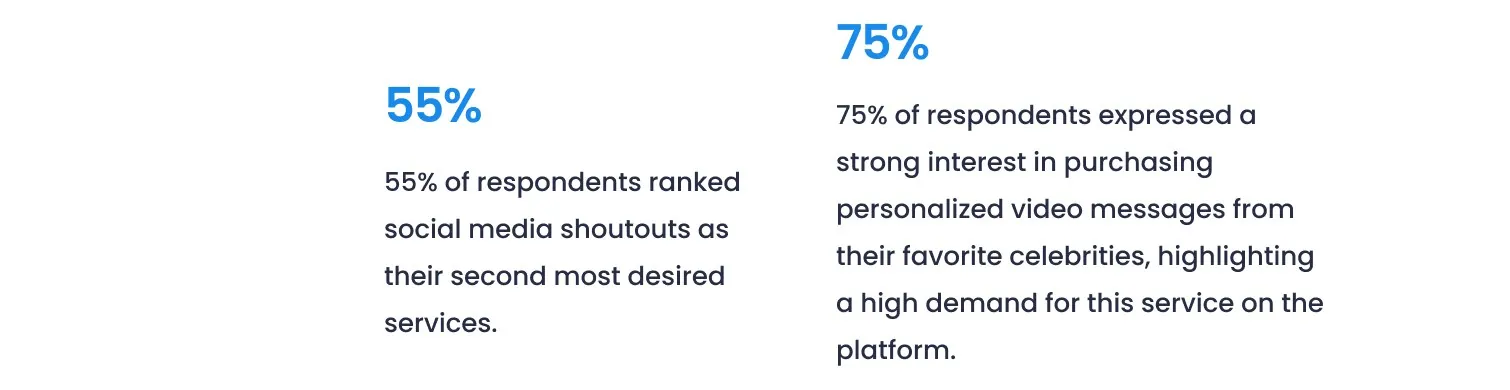
The strongest signal was for personalized video messages, at 75%. A majority also had a price in mind: 60% would spend $25 to $100 on a personalized interaction, which gave us a working price range. Live contact mattered too, with 45% preferring virtual meet and greets or video calls.
Competitors
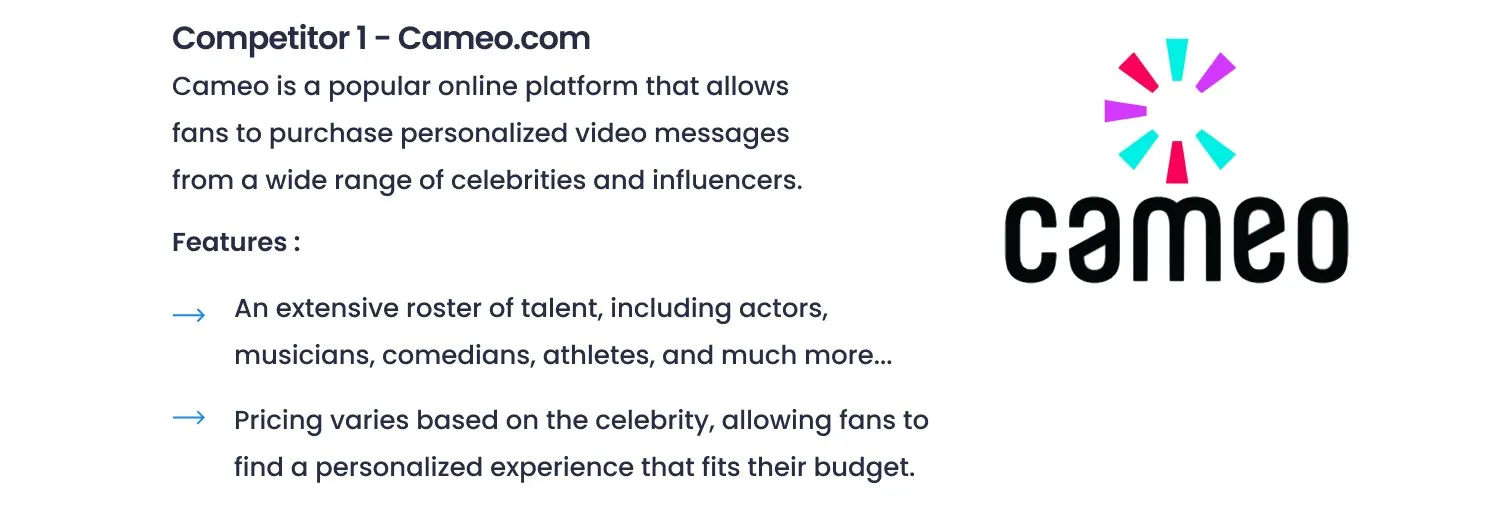
Cameo and Fanmio already sell personalized videos, so SuperEstar needed a different angle. Cameo has a huge talent roster with prices set per celebrity. Fanmio adds live one-on-one video chats and autographed merchandise.
We planned three features to set it apart. Fans could buy social media interactions, like a celebrity liking or commenting on their photo. Celebrities could design their own services and packages. And fans or celebrities who refer a new celebrity would get a revenue share, which fits the 35% who'd be more likely to use the platform with a referral or rewards program.
Who it's for
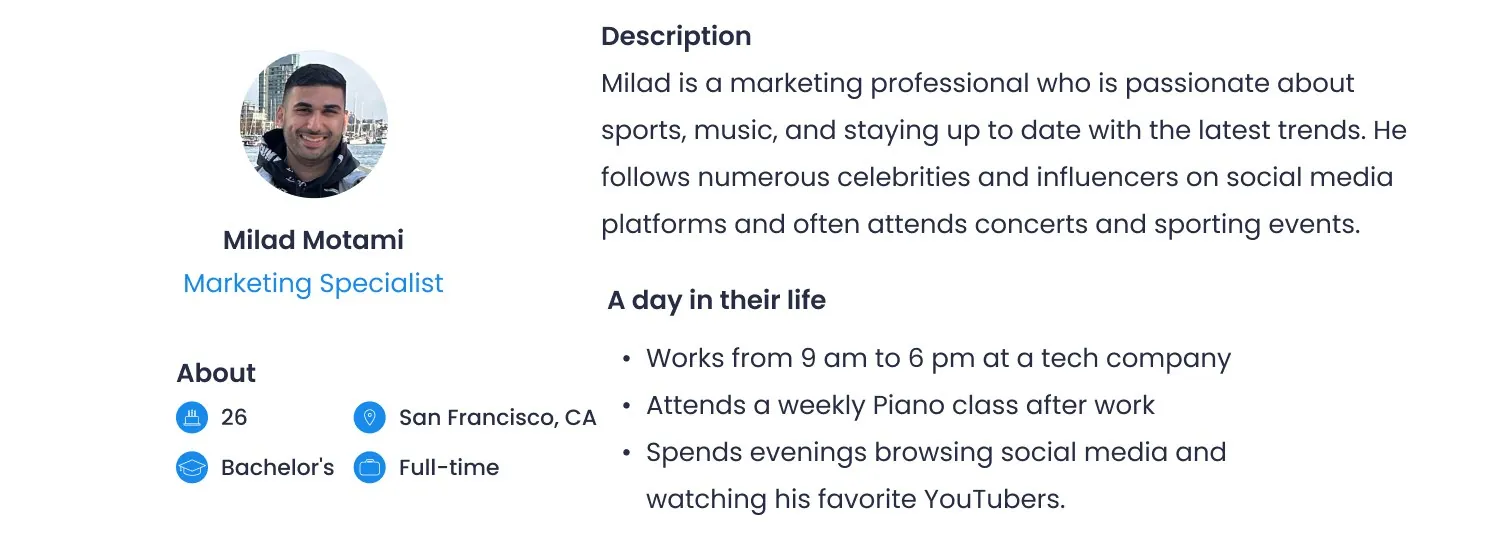
It's a two-sided marketplace, so I wrote a persona for each side. Milad, the fan persona, is 26, works in marketing in San Francisco and follows lots of celebrities online. Social media only gets him so close. In his words: "I wish there was an easier way to interact with my favorite celebrities and feel more connected to them."
Rebecca, the celebrity persona, is a 28-year-old Instagram influencer and YouTuber in Istanbul with over 3 million followers. She's looking for new ways to earn from her content, and she struggles to balance fan time with her own life. On the Maslow pyramid I placed Milad at esteem and Rebecca at love and belonging.
Mapping both sides
Task maps showed where each side would feel pressure. A fan signs up, browses, picks a service, then engages with the celebrity. Urgency peaks at picking a service, when the fan is weighing whether it's worth the money, so clear pricing at that step was the design opportunity.
Celebrities sign up, create their offerings, engage with fans and track earnings. Their first hurdle is account verification, which is the flip side of a fan concern the study flagged: is this celebrity real? Their last is knowing exactly what they've earned, so detailed earning reports went on the list.
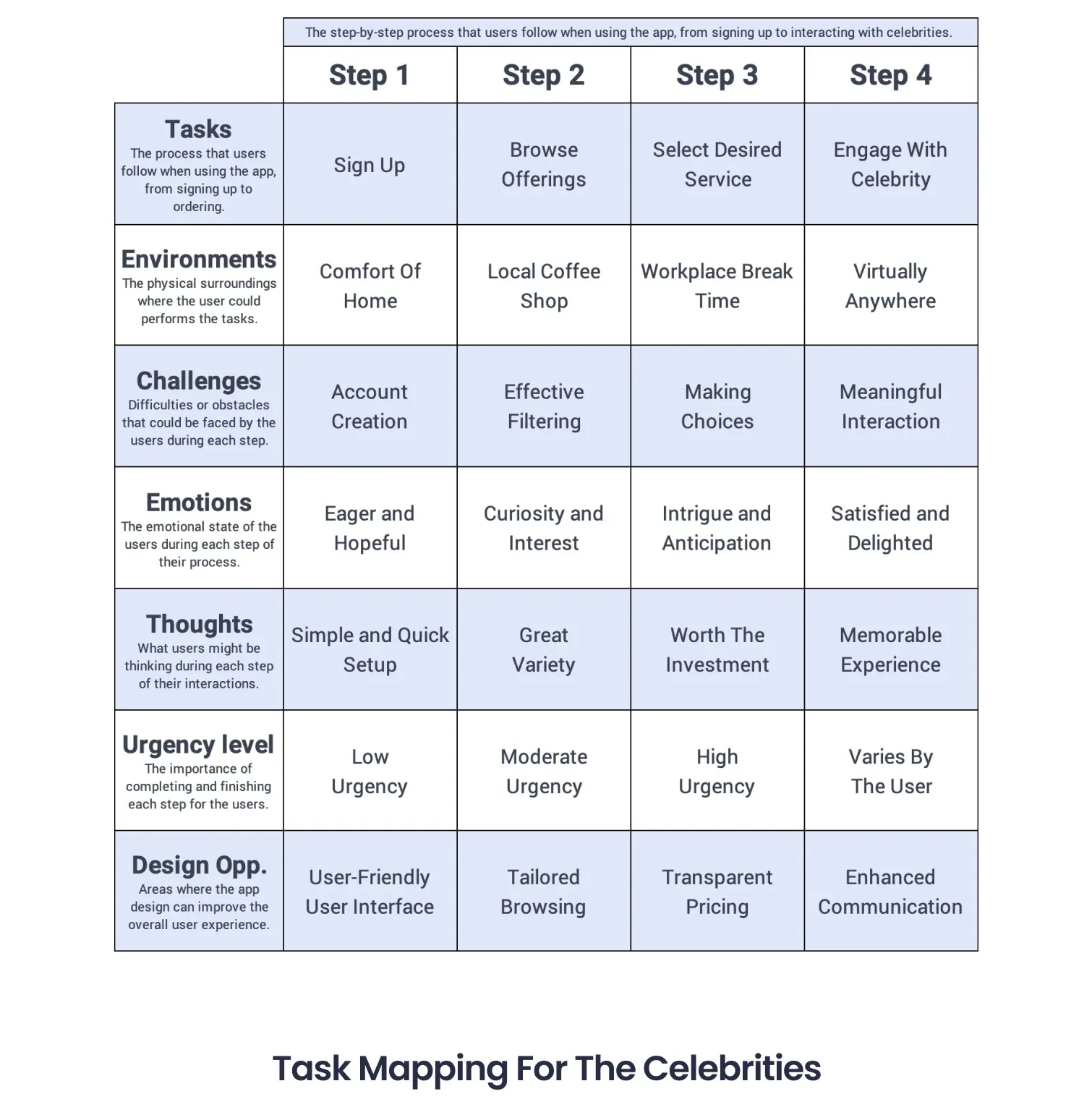
What comes first
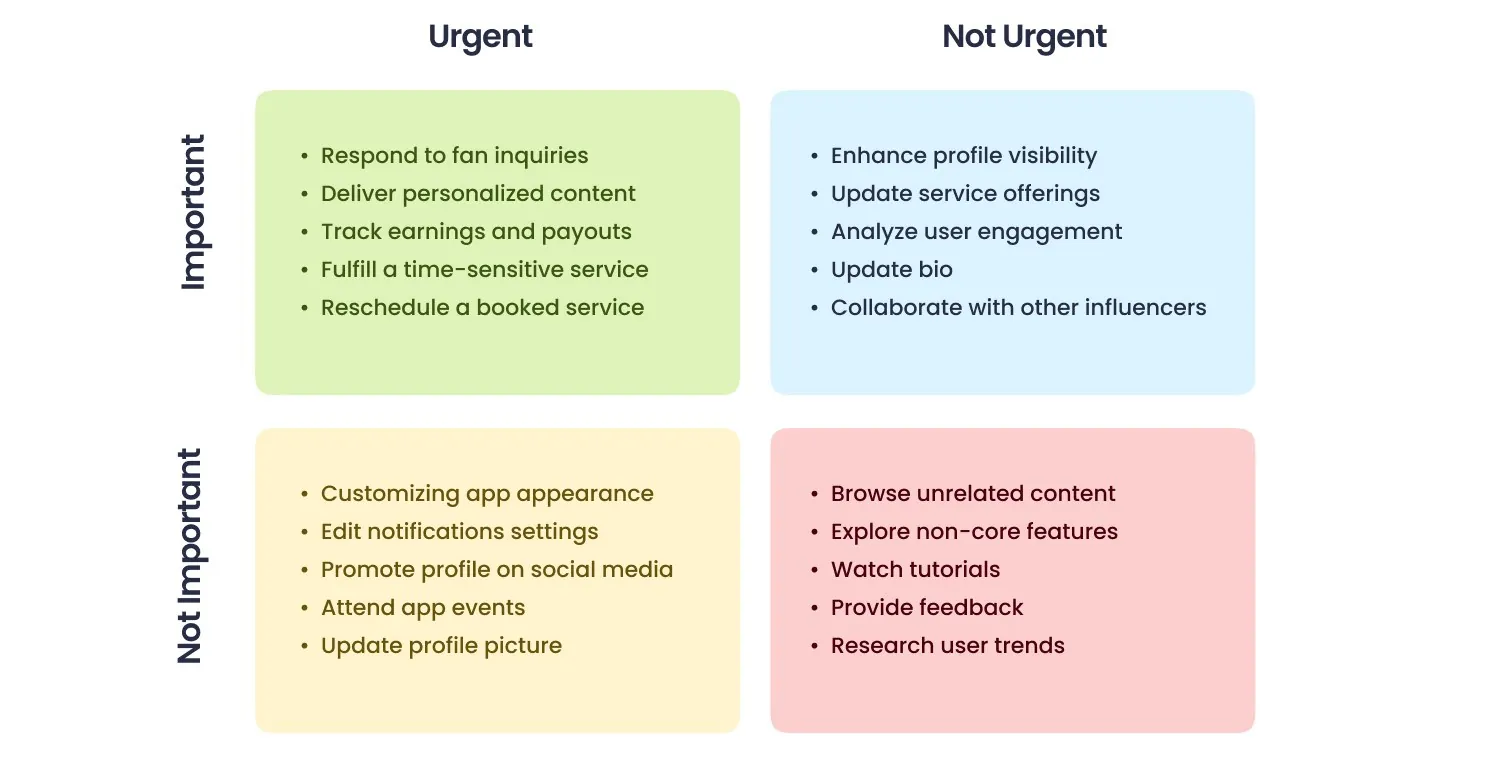
Both sides care most about the same thing: the booking itself. I sorted each side's tasks into an Eisenhower matrix by urgency and importance. For fans, the urgent and important box is booking, confirming details, critical messages, last-minute requests and cancelling. For celebrities it's answering fans, delivering content, tracking payouts and rescheduling.
Put side by side, those two boxes describe one booking seen from both ends, so that loop comes first. Customizing the app's look and watching tutorials sit in the not-important half for both.
This study comes from my earlier portfolio, where it was one long image. I rebuilt it as a readable page in 2026; the figures are the original slides.